

How Nurse Heather Knew Long Term Care was for Her
Meet Heather, one of our Mentors at NurseLearn
Heather is a community-based care nurse who comes from the skilled nursing world.
Heather became a nurse in 2000, initially graduating as an LPN. “I come from nurses,” Heather explains. “My mom was a nurse, my aunt was a nurse; I felt like it was what I was meant to do.”

Heather started working as a CNA in the activity department when she was just 16. On a random afternoon, she and some friends visited a local college to get information about their nursing program. “I remember going to the school just to get more information and leaving the school enrolled in the program,” she laughs.
Landing her first job as a nurse in a skilled nursing facility in her home state of Kentucky, she later went on to become a Unit Manager, where she stayed for several years. “But, I started to feel like a lot of doors were closed for me as a nurse because I wasn’t an RN,” she recalls. “That was when I decided to start working towards becoming an RN,” Heather says.
With the support of her husband as she worked through nursing school, Heather completed her Bachelors in nursing in 2012. Excited to work under her new license, Heather decided to leave long-term care to test the waters of acute care, feeling like, “that’s just what RNs are supposed to do.”
“All of my prior experience was in skilled nursing, so when I got to the hospital straight after becoming an RN it was like… I didn’t know how to function,” Heather remembers. “I was used to working with a team of people collaborating on care. As a night shift Med Surg Nurse in a rural hospital, that was not part of the routine.”
Everything about working in acute care was new to Heather, even down to the team culture. “At the time, the hospital culture was sort of competitive and combative,” she says. “I’ve never had that experience in skilled nursing or community-based care. There’s more of a team approach in long-term care because a colleague’s success means more than just a resident being provided health care––it means that resident has a good day and is safe and is comforted. I’ve always felt that my management and colleagues wanted each other to succeed.”
Heather started to realize that the hospital setting might not be for her. Shortly after, a friend reached out about a position as an Assistant Director of Nursing in a Skilled Nursing Facility.
“Being approached about that Assistant Director position made me feel like doors were starting to open up again,” says Heather. “It was my opportunity to start my clinical management career in an environment where I had extensive experience. Through that position, I learned how to interact with my peers on a different level, and I was fortunate to have an encouraging team that was supportive of my transition from floor to management.”
The Assistant Director role proved to be a helpful starting point in her journey as a nurse leader. Just a few years later, Heather went on to lead her own team of nurses as a Director of Nursing and then went on to become a Traveling Director of Nursing.
As a Traveling Director of Nursing, Heather was asked to visit an assisted living community in McMinnville, Oregon that was struggling. “I had never worked in assisted living prior to this, nor had I worked in Oregon, but my regional sent me the regulations and I got to studying,” she says.
“That is where I first met Cynthia McDaniel, NurseLearn’s Founder and CEO, who was working in the building as a consultant,” she recalls fondly.
“Coming from skilled, I was really skeptical of the assisted living model,” Heather says. “Cynthia’s team really put the whole thing into perspective for me in a way that made me enjoy the setting and appreciate it as a model that allows residents to age in place.”
Working alongside the nurse consultants, Heather and the team successfully helped the building get back on track. With her first assisted living experience in Oregon under her belt, the community-based care seed was planted into Heather’s mind, and eventually, Heather decided to leave her traveling role to work as a full time Director of Nursing in that community.
“You know, skilled nursing is all federally based, so it was challenging to learn the specificities of assisted living in Oregon,” Heather recalls. “Oregon is a diligent state when it comes to regulation. The state is invested in the sector in a way that is different from other states. And, there is an added layer of working in a building as typically the sole medically-licensed professional, which was new to me. In that context, education and leadership become huge parts of this role,” she says. “But I liked that––being able to teach and lead.”
After several years, Cynthia and Heather reconnected again, and Cynthia approached Heather about becoming a mentor for NurseLearn, a position where Heather could utilize her leadership and teaching skills.
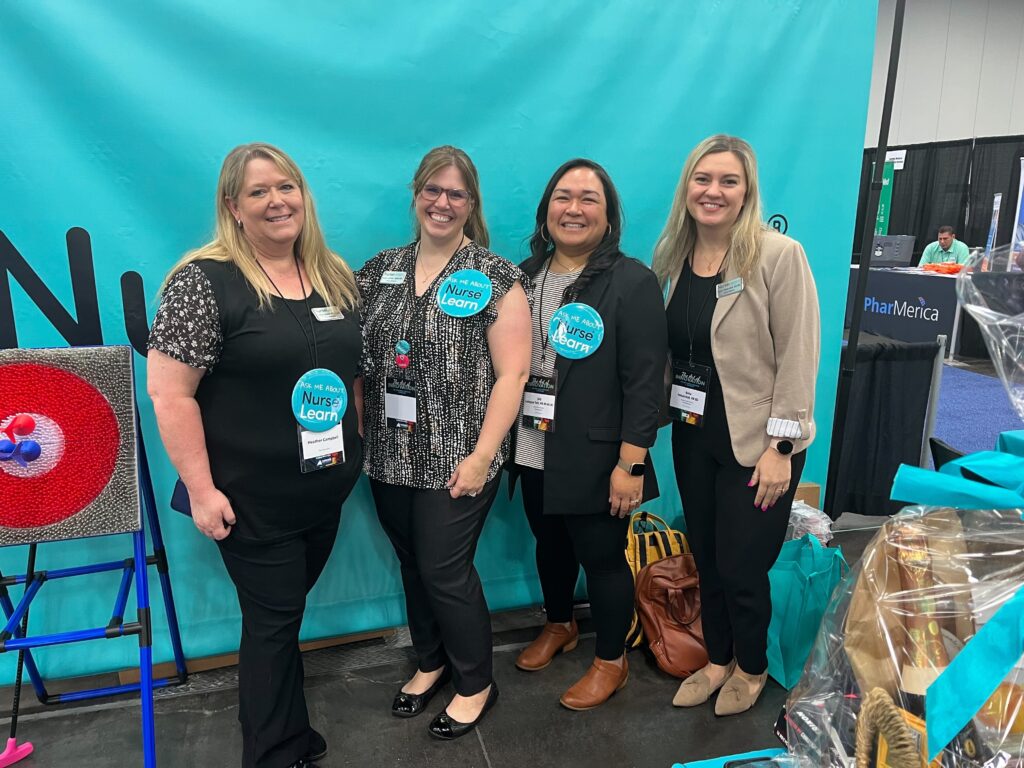
“I want the next generation of nurses to be trained well, feel supported, and have the confidence to think outside the box,” Heather says. “These are the people that are going to be taking care of us! We want them to do it well. And that is what was exciting to me about the idea of being a Nurse Mentor at NurseLearn,” she says.
“Unlike other settings,” Heather says, “community-based care and long-term care are settings where nurses can really spread their wings and show what they’ve got. There’s much more autonomy and independence with this level of care.”
And, with that autonomy and independence comes challenges. “Especially for those coming out of nursing school, leaping into community-based care can feel like a lot to chew,” Heather says. “There’s a lot more room to feel the weight of making mistakes or not knowing something. It all comes back to you as the nurse.”
“That is where I feel like I can come in as a mentor––helping nurses build their confidence,” she says. “A lot of times, a nurse in community-based care might only see their regional nurse when they are being talked to about doing something wrong. This was a personal experience of mine and is always in the back of my head,” Heather shares. “I want to make sure that we recognize the good and create positive moments for the nurse who may be struggling or who may just need a little positive reinforcement.”
Heather recounts a story of when this sort of mentorship played a big role in someone’s life. “I once worked with a nurse in skilled nursing. She was a newer nurse, and we spent a lot of time working together, so I saw that there were some practices to polish up,” Heather remembers.
“Most importantly, I saw that she was a great nurse who truly cared about the work she was doing and her impact on her residents. One day, a Health and Wellness Director position in memory care opened up, and I encouraged her to take the role. This would require her to transition from skilled into community-based care, just like I had done. She was nervous and scared and unsure, but she did it––she put herself out there and trusted she could do it!”
“She has now been in that role for six years, and she just recently had a survey that went extremely well, a feat she should be really proud of. She absolutely spread her wings there and became an incredible leader. She really thrives working with her team of caregivers,” Heather says fondly.
That nurse is named Windy, and Windy went on to enroll in and graduate from NurseLearn’s Enhanced Program, a certification program for nurses of all levels in community-based care.
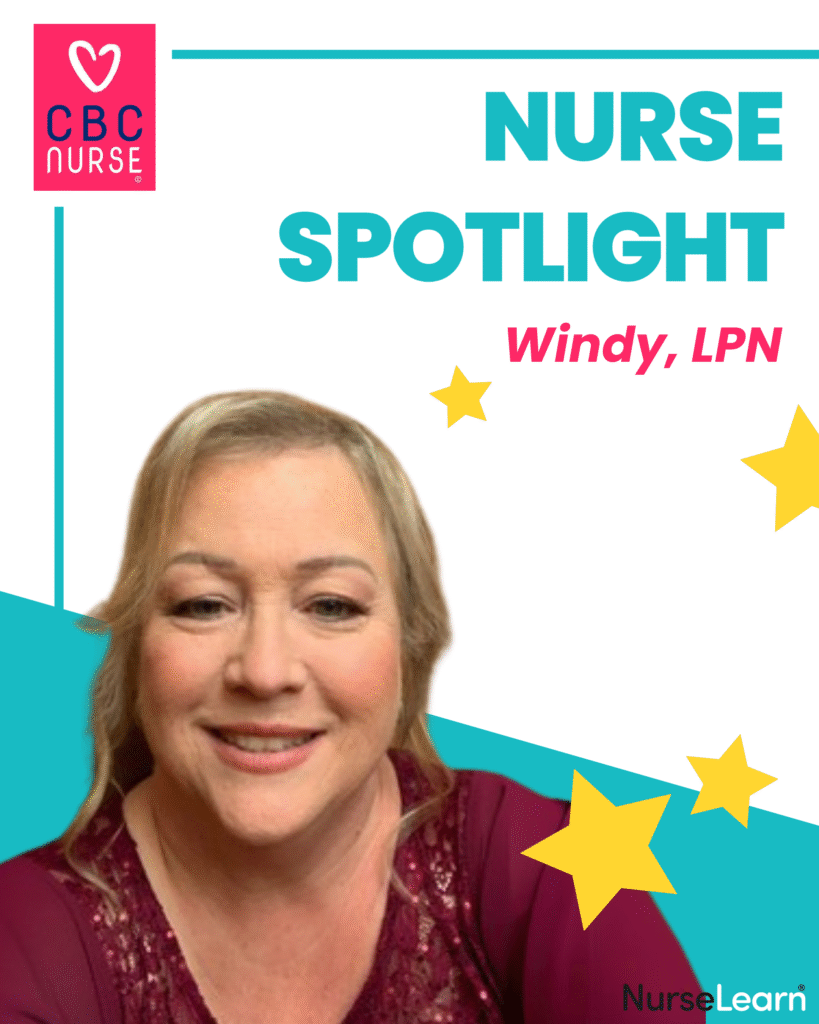
“Today, she is one of the nurses that I call for her insight and perspective. Being her former supervisor and watching her become a successful nurse manager––she’s just grown so much,” Heather says.
Reflecting on Heather’s full career in long-term care, Heather says, “I think as nurses, we owe community-based care a shot. It gives nurses the opportunity to be active in someone’s care for the long term. Many students in RN programs are conditioned to work in the hospital. But, it’s important to know that there are other areas of nursing out there where you can become a highly trained nursing expert that contributes to someone’s everyday wellbeing.”
“I could have stayed at the hospital,” Heather says, “but it just wasn’t my thing. I like the ability to get to know somebody––be it my residents or my teammates––in a more personable way. In community-based care, I feel like I’m doing good.”